
← Back to Manufacturing & Operations
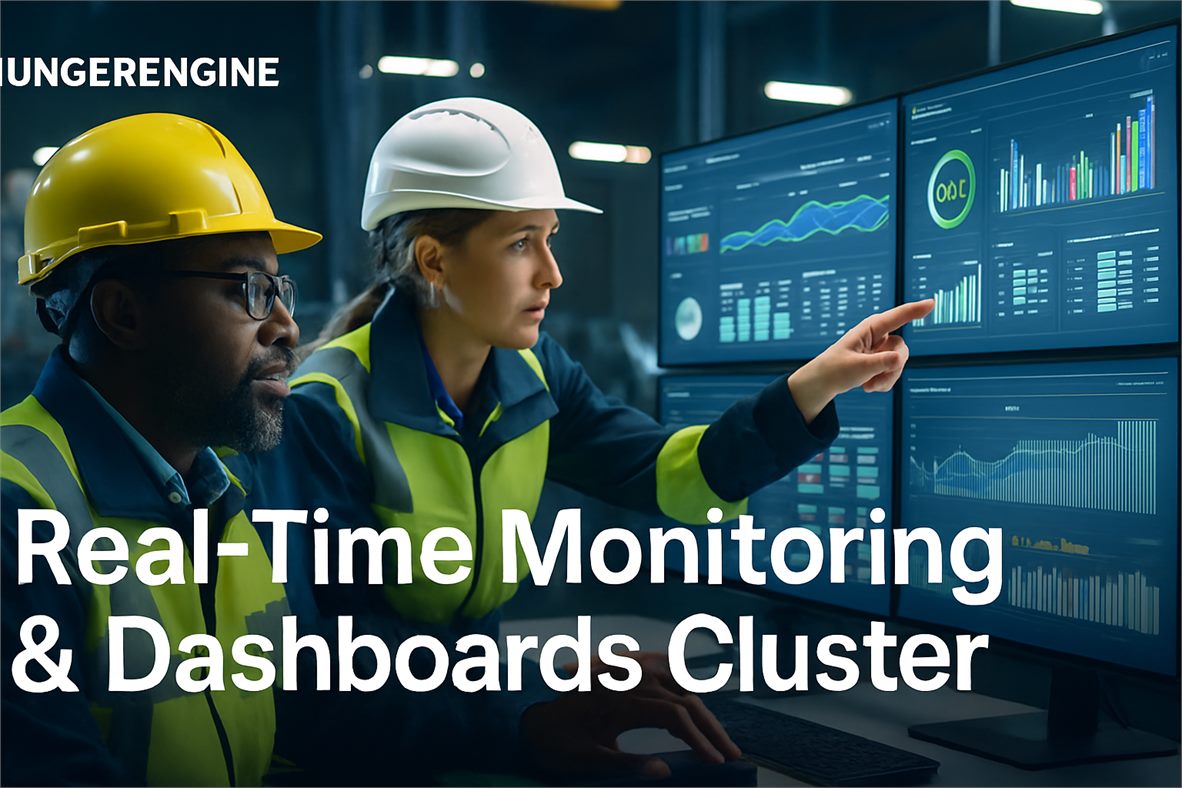
Real-Time Monitoring & Dashboards Cluster
Guidance and templates for SCADA/IIoT dashboards, real-time OEE, alerts, and operator displays for manufacturers and plant teams.
Real-Time Monitoring & Dashboards Cluster
Build reliable, actionable real-time views—dashboards, OEE calculations, alerts, and operator displays—that expose bottlenecks, trigger the right huddles, and surface early warnings before problems escalate.
What you'll understand and be able to do
You will learn practical patterns for designing operator-facing screens, calculating OEE in real time, choosing KPIs that matter, tuning alert thresholds, and validating data sources so decisions are based on accurate signals rather than noise. You will practice dashboard layouts, test OEE math with sample data, and apply simple rules to reduce alert fatigue.
Who benefits
This cluster helps plant managers, supervisors, process and controls engineers, maintenance leads, quality professionals, continuous improvement coaches, and small-shop owners who need clear, trustworthy real-time insight. Examples: a CNC job shop that wants to spot tool- or operator-caused downtime; a food-processing line balancing oven availability and throughput; a maintenance contractor setting meaningful equipment alarms to avoid false calls.
How this fits the Intelligent Manufacturing & Operations domain
Real-time dashboards are a practical entry point to the Intelligent Manufacturing & Operations ecosystem: they turn machine and process signals into organizational memory, trigger huddles and improvement actions, and feed learning cycles that improve safety, quality, and throughput over time. Use this cluster to connect SCADA/IIoT feeds, validate calculations before embedding them in MES reports, and create displays operators actually use.
Common pitfalls this cluster helps you avoid
Many monitoring projects fail because dashboards are noisy, calculations are wrong, alerts create fatigue, or displays are ignored. This collection focuses on preventing those problems by clarifying KPI choices, documenting calculation logic, validating inputs, designing for the operator’s context, and establishing simple escalation rules so alerts lead to useful action instead of confusion.
Make useful resources part of something bigger.
The Hunger Engine is moving toward living domains, toolkits, and collections that people and organizations can explore, acquire, tailor, extend, and improve. A useful resource can become part of a personal collection, team toolbox, site-specific domain, or shared enterprise capability.
Start with what you're hungry to improve. As your needs grow, collections can bring together knowledge, audits, forms, dashboards, data, AI, integrations, and other capabilities without requiring you to start from scratch.