
← Back to Organizational Intelligence: Learn, Decide, and Improve Together
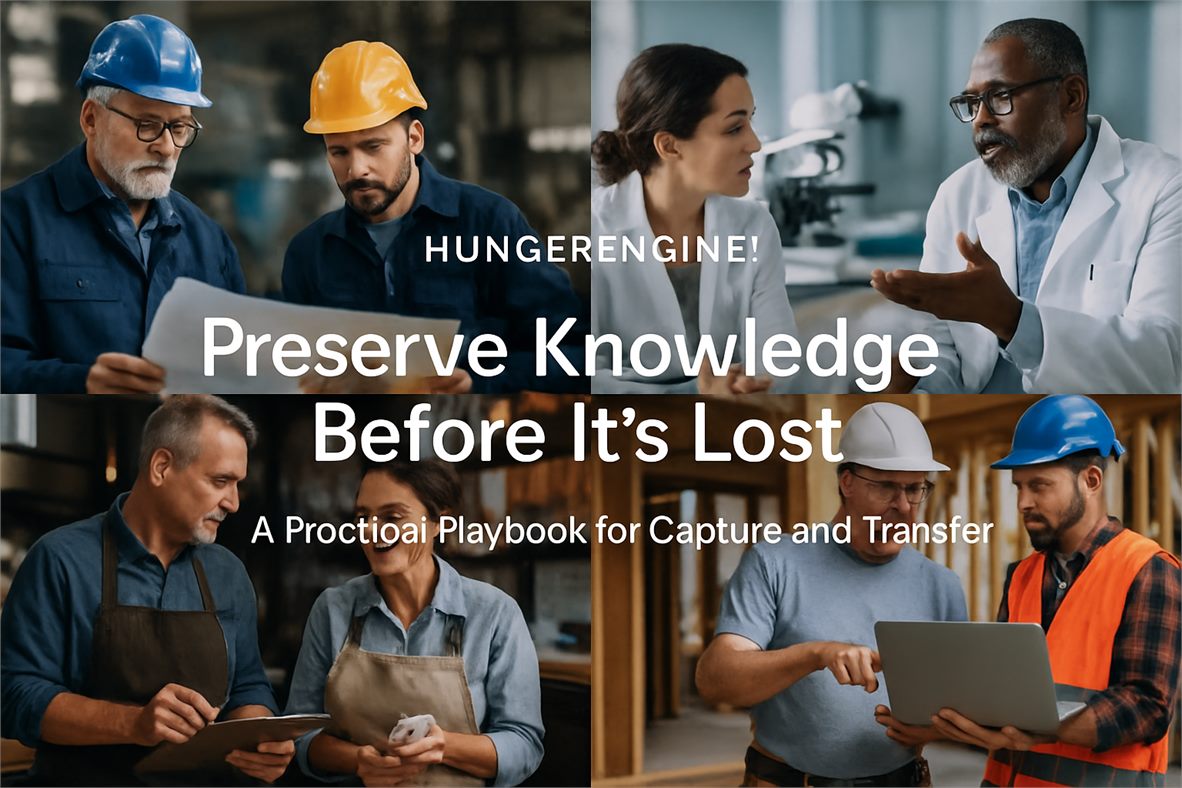
Preserve Knowledge Before It's Lost: A Practical Playbook for Capture and Transfer
Practical steps, templates, and roles to capture tacit knowledge and make onboarding and handoffs reliable across teams.
Preserve Knowledge Before It's Lost: A Practical Playbook for Capture and Transfer
Learn reliable, repeatable methods to capture people’s expertise, turn experience into usable guidance, and make handoffs and onboarding faster and less fragile.
What you will understand and be able to do
This playbook teaches a clear sequence of actions—identify critical knowledge, run focused knowledge interviews, codify best practices into simple templates, assign ownership, and schedule lightweight reviews—so teams stop depending on memory, email threads, or tribal know‑how. You’ll practice creating one-page operating guides, role-based checklists, and transfer sessions that preserve context and intent.
Who benefits
Useful for team leads, onboarding coordinators, operations supervisors, HR professionals, consultants, and small-business owners—anyone who needs consistent ramp-up, reliable handoffs, or fewer repeated mistakes. Examples: a roofing contractor documenting crew techniques and safety checks; a clinic improving shift handovers for clinical teams; a factory capturing machine maintenance steps from veteran technicians; a nonprofit preserving grant-writing templates between program managers.
How this playbook fits into Organizational Intelligence
Capturing and transferring knowledge is a practical building block of organizational intelligence: it turns individual experience into shared learning that improves decisions, reduces rework, and preserves value when people move roles. Use this playbook as a repeatable practice within a broader knowledge ecosystem—pair it with periodic knowledge audits, simple onboarding pathways, and short team huddles to keep content current and discoverable.
Practical next steps you can take today
Start with one high‑impact role or process. Run a 60‑minute interview with an experienced person, create a one‑page how-to with common pitfalls and contacts, run a 30‑minute transfer session with the incoming person, and assign a steward to review the document quarterly. Small, repeatable steps create durable institutional memory.
Access the free playbook for ready-to-adapt templates, interview prompts, and transfer checklists to begin preserving knowledge in your team.
Make useful resources part of something bigger.
The Hunger Engine is moving toward living domains, toolkits, and collections that people and organizations can explore, acquire, tailor, extend, and improve. A useful resource can become part of a personal collection, team toolbox, site-specific domain, or shared enterprise capability.
Start with what you're hungry to improve. As your needs grow, collections can bring together knowledge, audits, forms, dashboards, data, AI, integrations, and other capabilities without requiring you to start from scratch.